


Sotheby's International Realty
- 74 boulevard de la Croisette
- 06400 CANNES, France
- +33 4 92 92 12 88
Sotheby's International Realty
- 37 boulevard Marinoni
- 06310 BEAULIEU SUR MER, France
- +33 4 92 92 12 88
Sotheby's International Realty
- 3 avenue Denis Semeria
- 06230 SAINT JEAN CAP FERRAT, France
- +33 4 92 92 12 88
Sotheby's International Realty
- 9 avenue Paul Roussel
- 83990 SAINT TROPEZ, France
- +33 4 92 92 12 88
Sotheby's International Realty
- 5 rue Longchamp
- 06000 NICE, France
- +33 4 92 92 12 88
Sotheby's International Realty
- 300 avenue de Tournamy
- 06250 MOUGINS, France
- +33 4 92 92 12 88
- Home
- >
- News
- >
- Never publicly exhibited, a Monet masterpiece estimated at up to €30 million comes to Sotheby’s Paris
Never publicly exhibited, a Monet masterpiece estimated at up to €30 million comes to Sotheby’s Paris
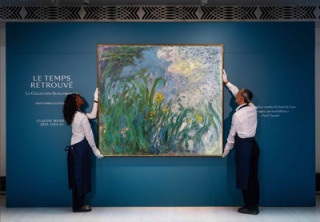
Hidden from public view for decades, a late masterpiece by Claude Monet is about to make a remarkable appearance on the art market. On 22 October 2026 in Paris, Sotheby’s will offer the Jeanne Schlumberger Collection, an exceptional group of Impressionist and Modern works estimated at more than €40 million. At its heart is Iris, painted by Monet in 1924–1925 and expected to achieve between €22 million and €30 million.
A remarkable collection kept out of the public eye
Some collections tell us as much about the people who assembled them as they do about the artists they represent. The collection of Jeanne Schlumberger (1889–1983) is one such example.
Built over several decades and long preserved away from public view, the collection brings together works by Claude Monet, Paul Cézanne, Gustave Moreau, Camille Claudel, Pierre Bonnard, Gustave Courbet, Eugène Delacroix and Chaïm Soutine, among others.
Sotheby’s describes it as one of the most important private collections of Impressionist and Modern art ever to be offered at auction in France.
Jeanne Schlumberger developed her discerning eye as a collector with the support of the influential gallerist Katia Granoff. Together, they showed an early interest in Monet’s late works, at a time when this period of the artist’s career had yet to receive the recognition it enjoys today.
In retrospect, this choice appears remarkably prescient. Monet’s late paintings, characterised by increasingly liberated brushwork, radical compositions and the gradual dissolution of form, are now regarded as an essential link between Impressionism and some of the defining artistic developments of the 20th century.
Iris: a Monet never before exhibited to the public
The undisputed highlight of the sale is Iris.
Painted in 1924–1925, towards the very end of Claude Monet’s life, the work belongs to his celebrated Giverny period. Sotheby’s has placed an estimate of €22 million to €30 million on the painting and describes it as the most important work from this series ever to appear at auction.
Its provenance adds considerably to its exceptional character. The painting passed directly from Monet to his son Michel before being acquired by Katia Granoff and subsequently entering the collection of Jeanne Schlumberger.
Kept within the private sphere for decades, the painting has never previously been publicly exhibited and was, until recently, known primarily through a black-and-white photograph.
In this monumental composition, Monet moves far beyond conventional botanical representation. Flowers, water, sky and reflections seem to merge into one another. The viewer gradually loses any clear sense of perspective, and the painted surface approaches abstraction.
With the centenary of Monet’s death in December 1926 approaching, the emergence of such a late and little-seen work gives this sale particular resonance.
Four works by Monet in a single auction
Iris is not the only Monet from the Schlumberger Collection coming to auction in Paris.
Four works by the artist feature in the sale. Alongside Iris, Saule pleureur ou L’Arbre de feu is estimated at €9 million to €12 million. La maison à travers les roses carries an estimate of €2 million to €3 million, while La Seine à Vernon, l’arbre is expected to achieve between €1.2 million and €1.8 million.
Together, these paintings offer an extraordinary insight into Monet’s exploration of landscape, light, colour and perception.
The striking Saule pleureur, in particular, belongs to Monet’s celebrated group of paintings depicting the weeping willows at Giverny. The work moves between observation of nature and extraordinary chromatic freedom, illustrating the increasingly radical visual language of Monet’s final years.
From Cézanne to Camille Claudel: the collection’s other treasures
While Monet may command much of the attention, the Schlumberger Collection offers a considerably broader journey through Modern art.
Paul Cézanne is represented by important works originating from the Jas de Bouffan, his family estate near Aix-en-Provence and one of the key settings for his early artistic development.
Sculpture also features prominently, notably with Camille Claudel’s La Valse, petit modèle, estimated at €400,000 to €600,000.
The Symbolist movement is represented by Gustave Moreau and Rêve d’Orient (La Péri), dating from one of the artist’s most sought-after periods and estimated at €600,000 to €800,000.
Works by Bonnard, Courbet, Delacroix and Soutine further enrich the collection, creating a remarkable dialogue between several generations of artists who helped transform French and European art.
Collecting as an expression of vision
Beyond the headline estimates, the Schlumberger Collection is a reminder of one of the defining qualities of any exceptional collection: vision.
Jeanne Schlumberger did not simply acquire artists whose names are now universally celebrated. She was drawn to particular works and periods at a time when their significance had yet to be fully recognised by either the market or critics.
This is particularly true of Monet’s late paintings.
Collecting is also about recognising the importance of a work before its place in history becomes self-evident. It requires intuition, sensitivity and knowledge.
In this respect, the worlds of fine art and exceptional real estate share certain fundamental qualities. Value is never determined by rarity alone. Provenance, history, location, singularity, craftsmanship and the emotions an exceptional object or property can inspire over generations all contribute to its enduring appeal.
Sotheby’s: from exceptional art to exceptional properties
The sale also highlights the longstanding relationship between the Sotheby’s name and collectors around the world.
Founded in London in 1744, Sotheby’s has spent nearly three centuries bringing together exceptional works, objects and collectors. Today, this culture of expertise and international connection is also reflected in the world of luxury real estate through Sotheby’s International Realty.
On the French Riviera, Côte d’Azur Sotheby’s International Realty brings this same commitment to excellence to French and international clients seeking distinctive properties: historic villas, private estates, contemporary residences, exceptional apartments overlooking the Mediterranean and confidential off-market properties.
Fine art and luxury real estate ultimately share a common reality: truly exceptional assets are inherently rare and understanding their value requires expertise, market knowledge and an appreciation of their individual history.
On 22 October in Paris, a collection that remained almost entirely private for decades will return to the international spotlight.
And at its centre will be Monet’s extraordinary Iris.
The Schlumberger Collection: Le Temps retrouvé
Auction: 22 October 2026 at 6 pm
Location: Sotheby’s Paris, 83 rue du Faubourg Saint-Honoré, Paris 8th arrondissement
Collection: Impressionist and Modern Art
Overall estimate: more than €40 million
Claude Monet, Iris: €22 million–€30 million
Photo credit: Sotheby’s
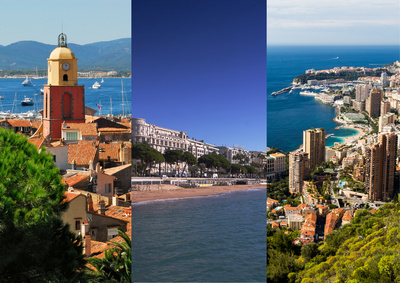
After Hawaii, Sicily and Thailand, HBO’s global phenomenon The White Lotus has chosen the French Riviera as the setting for its fourth season, due to air in 2027. Cannes, Saint-Tropez and Monaco will provide the backdrop for the new storyline, with the Cannes Film…
Read more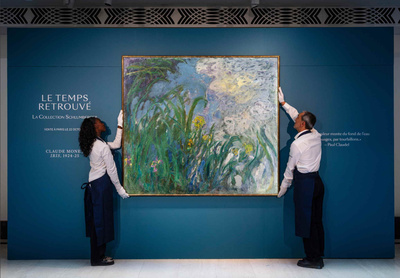
Hidden from public view for decades, a late masterpiece by Claude Monet is about to make a remarkable appearance on the art market. On 22 October 2026 in Paris, Sotheby’s will offer the Jeanne Schlumberger Collection, an exceptional group of Impressionist and Modern…
Read more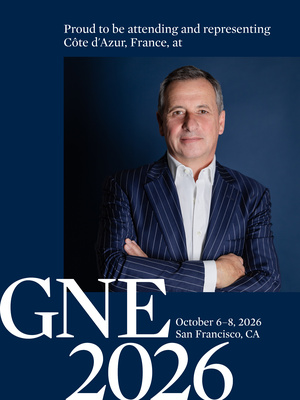
From October 6 to 8, 2026, Sotheby’s International Realty will bring together members of its global network in San Francisco for the Global Networking Event, GNE, one of the brand’s most important international gatherings. This year’s edition holds particular…
Read more