


Sotheby's International Realty
- 74 boulevard de la Croisette
- 06400 CANNES, France
- +33 4 92 92 12 88
Sotheby's International Realty
- 37 boulevard Marinoni
- 06310 BEAULIEU SUR MER, France
- +33 4 92 92 12 88
Sotheby's International Realty
- 3 avenue Denis Semeria
- 06230 SAINT JEAN CAP FERRAT, France
- +33 4 92 92 12 88
Sotheby's International Realty
- 9 avenue Paul Roussel
- 83990 SAINT TROPEZ, France
- +33 4 92 92 12 88
Sotheby's International Realty
- 5 rue Longchamp
- 06000 NICE, France
- +33 4 92 92 12 88
Sotheby's International Realty
- 300 avenue de Tournamy
- 06250 MOUGINS, France
- +33 4 92 92 12 88
- Home
- >
- Luxury real estate
- >
- French Riviera luxury real estate market: trends for autumn 2026
French Riviera luxury real estate market: trends for autumn 2026

Following a particularly active summer season on the Riviera, autumn 2026 provides an opportunity to take stock of the luxury real estate market across the French Riviera. From Saint-Tropez to Cannes, from Mougins to Nice and onwards to Saint-Jean-Cap-Ferrat and the areas bordering Monaco, one trend is becoming increasingly clear: the most desirable properties continue to attract sustained demand, while buyers have become more selective.
Location, views, quality of renovation, architecture, surroundings, privacy and accessibility are more decisive than ever. In a market where two neighbouring properties can experience very different sales trajectories, the intrinsic quality of a home and the consistency of its pricing strategy have become essential.
From fair market pricing to greater selectivity: a trend confirmed this autumn
At the end of the summer, we were already observing a real estate market entering a period of greater arbitration and fair market pricing. The first weeks of autumn confirm this development: activity remains present, but purchasing decisions increasingly depend on a property's true value, scarcity and the consistency of its asking price.
This shift is particularly significant in luxury real estate. French and international buyers continue to seek the finest addresses on the French Riviera, but they are assessing the properties presented to them more carefully. A prestigious location alone is no longer necessarily enough: architectural quality, condition, views, outdoor spaces, surroundings, amenities and long-term value all play a central role in the decision-making process.
For sellers, the message is equally important. Correctly positioned properties can attract their market quickly, whereas an asking price significantly above current expectations can slow down a sale, even for a home located in a highly sought-after area.
A luxury market with its own dynamics
The broader French real estate market remains mixed. The latest available indicators point to a market that has regained some momentum following the slowdown of previous years, without returning to the particularly buoyant conditions seen at the beginning of the decade.
Luxury real estate, however, follows somewhat different dynamics.
On the French Riviera, a significant proportion of high-end purchases are influenced less by financing conditions alone than by broader wealth management, family and international considerations. A property may be acquired as a primary or secondary residence, as a long-term asset, or as a combination of these uses.
The financial capacity of luxury buyers does not mean, however, that price becomes secondary. Indeed, one of the key lessons of 2026 is that having a substantial budget does not eliminate comparison or negotiation.
Even at the highest end of the market, value must be demonstrated.
Scarcity remains one of the French Riviera's strongest market drivers
Speaking of an average price for luxury real estate across the French Riviera ultimately has limited relevance.
A contemporary villa with panoramic sea views in Cannes Californie, a property within a private estate in Mougins, a villa close to the beaches of Pampelonne, an exceptional apartment on the Croisette or an estate in Saint-Jean-Cap-Ferrat each belongs to a different market and appeals to a different buyer profile.
Scarcity, however, is the common denominator.
The most desirable locations have naturally limited inventory, while opportunities to create new properties combining substantial grounds, views, generous volumes, privacy and contemporary amenities remain constrained.
This is even more pronounced within the ultra-prime segment. Waterfront villas, properties with direct sea access, large private estates, penthouses with expansive terraces and panoramic views, or homes with substantial grounds in the Riviera's most sought-after locations are inherently difficult to replicate.
It is precisely this scarcity that allows the finest properties to follow a trajectory that can differ significantly from the wider real estate market.
Buyers remain active, but increasingly selective
This is probably one of the most important developments as 2026 enters its final months.
A substantial budget does not mean accepting any asking price.
French and international buyers are comparing properties more closely, assessing their condition, surroundings and the investment that may be required following acquisition. An outstanding renovation, distinctive architecture, excellent exposure, exceptional views or a particularly rare address can justify a significant premium.
Conversely, when a property requires extensive renovation, presents certain constraints or is priced noticeably above comparable homes, buyers are taking more time before making a decision.
This increased selectivity should not necessarily be interpreted as buyers withdrawing from the market.
Rather, it reflects a change in the way luxury property is being purchased: decisions remain emotional, particularly at the upper end of the market, but they are now accompanied by a much more detailed assessment of value.
International buyers remain essential to the Riviera
The international dimension remains one of the defining characteristics of the French Riviera luxury real estate market.
Few destinations bring together so many internationally recognised residential markets within such a compact area: Saint-Tropez and its gulf, Cannes, Cap d'Antibes, Nice, Saint-Jean-Cap-Ferrat and the locations surrounding Monaco.
For international buyers, purchasing a property on the Riviera often forms part of a wider decision that extends well beyond the French real estate market.
American, British, Swiss, Belgian, Scandinavian or Middle Eastern buyers may compare a French Riviera property with homes in other European or international destinations. The quality of the property matters, but so do accessibility, services, security, climate, cultural and gastronomic appeal, and the ability to reach major European capitals easily.
Nice Côte d'Azur Airport therefore plays a major role in supporting the residential appeal of the entire region.
From second home to a residence that is truly lived in
The way owners use their French Riviera properties is also evolving.
For part of the international clientele, the distinction between a primary and secondary residence has become increasingly fluid. Some properties that might once have been occupied for only a few weeks each year are now becoming genuine homes for several months at a time.
This evolution naturally affects buyers' search criteria.
Particular attention is being paid to outdoor living areas, the ability to work comfortably from the property, guest accommodation for family and friends, wellness or sports facilities, security, nearby services and ease of travel.
A luxury property is no longer necessarily viewed simply as a holiday home. It increasingly needs to support a complete lifestyle.
Cannes, Mougins, Nice, Cap-Ferrat and Saint-Tropez: a collection of distinct micro-markets
One of the mistakes when analysing the French Riviera today would be to treat it as a single real estate market.
Instead, it consists of a collection of highly distinctive micro-markets, sometimes differing considerably within just a few kilometres.
In Cannes, the city's emblematic addresses continue to command strong appeal. The Croisette, Palm Beach, La Californie, Super-Cannes and Croix des Gardes each offer a different lifestyle and property profile, ranging from prestigious apartments and penthouses to villas and substantial private estates.
In Mougins and the Cannes hinterland, villas with generous grounds, swimming pools and peaceful surroundings appeal to buyers seeking greater space and privacy while remaining within easy reach of Cannes, Sophia Antipolis and Nice International Airport.
In Nice, the market combines urban and residential living: apartments in central neighbourhoods, top-floor residences with terraces, hillside estates and villas overlooking the Mediterranean create a particularly diverse luxury property offering.
From Beaulieu-sur-Mer to Saint-Jean-Cap-Ferrat, and onwards towards Èze, Cap-d'Ail, Beausoleil and Roquebrune-Cap-Martin, proximity to Monaco, limited land availability and Mediterranean views underpin a highly international market.
Finally, in the Gulf of Saint-Tropez, properties combining proximity to the sea, privacy, architectural quality and substantial grounds remain naturally limited in supply.
These differences make regional averages of limited relevance when assessing the value of an individual property.
Financing remains a factor to watch
Although luxury buyers are generally less dependent on mortgage financing than the wider residential market, financing conditions cannot be entirely overlooked.
They directly influence certain segments of the market and can also form part of the wealth management strategies of buyers who nevertheless have sufficient liquidity to complete a purchase.
At the upper end of the market, borrowing can be as much a strategic financial decision as a funding necessity.
Interest rates, the opportunity cost of capital, the performance of other asset classes, taxation and currency movements for international buyers therefore contribute to an increasingly complex equation.
Sellers: why asking price matters in 2026
For an owner considering selling this autumn, the market remains capable of placing significant value on a high-quality property.
But the initial asking price has become strategic.
In an increasingly transparent and international market, a buyer with several million euros to invest will generally have a strong understanding of the available inventory. Buyers compare properties, monitor how long they have been marketed and can broaden their search across several areas of the French Riviera.
Deliberately overpricing a property in anticipation of substantial negotiation can therefore become counterproductive.
A home that remains on the market for too long gradually loses the sense of novelty associated with its launch. Prospective buyers may also begin to question why it has not sold and wait for a price adjustment before submitting an offer.
Conversely, pricing a property correctly does not mean undervaluing it.
Its address, views, quality of the grounds, orientation, architecture, renovation, privacy, services and the scarcity of comparable properties can justify substantial differences in value between two homes located within the same area.
The objective is therefore to determine a price that accurately reflects the property's scarcity while remaining consistent with current market conditions.
Buyers: is it better to wait or buy?
This question naturally arises in a more selective market.
However, waiting for a general fall in prices across the entire French Riviera luxury market can mean basing a decision on an average that has little relevance to the type of property being sought.
For a property with several comparable alternatives, requiring renovation or having remained on the market for an extended period, conditions may provide greater scope for negotiation.
The situation is different when a genuinely rare property becomes available.
A waterfront villa, an exceptional top-floor apartment, an estate occupying a difficult-to-replicate plot or a villa combining location, views, renovation and privacy may have very few true equivalents.
In such circumstances, the question is no longer simply whether the wider market might rise or fall by a few percentage points, but when another comparable opportunity might become available.
For buyers, the challenge is therefore to distinguish an expensive property from a genuinely rare one.
Are properties requiring renovation becoming attractive again?
In a market where renovated, move-in-ready homes continue to attract strong interest, properties requiring work can also create opportunities.
They may provide access to a location that would otherwise be difficult to secure with a fully renovated home, or allow buyers to create a property tailored precisely to their own requirements.
This strategy nevertheless requires careful analysis.
The cost and duration of works, planning restrictions, architectural potential, energy performance, construction access and the availability of contractors all need to be considered from the outset.
In locations where land is particularly scarce, a property's underlying value may therefore lie as much in its position and plot as in the existing building itself.
What is the outlook for the final quarter of 2026?
As the final quarter begins, the French Riviera luxury real estate market presents a picture that is both resilient and increasingly nuanced.
The region's fundamentals remain powerful: structurally limited land availability, an international buyer base, excellent accessibility, an exceptional concentration of rare properties and the enduring appeal of the Mediterranean lifestyle.
Yet the most important change in 2026 may concern buyer and seller behaviour rather than prices themselves.
Buyers remain active, but they are increasingly selective. Sellers can still achieve strong values, but the initial positioning of their property has become critical. Truly exceptional homes, meanwhile, continue to be partly insulated from broader market trends by their inherent scarcity.
The final months of the year therefore appear to confirm a trend that has been developing for some time: the French Riviera luxury property market has not become less attractive; it has become more demanding.
Value no longer rests on a prestigious address alone. It results from the combination of location, quality, scarcity, long-term potential and appropriate pricing.
Buying or selling a luxury property on the French Riviera
In such a highly segmented market, understanding broad trends is not enough. The value of a property can be determined at the level of an individual street, residence or private estate, and sometimes by something as specific as the orientation or quality of its views.
With a presence across the Riviera's principal luxury property markets, the teams at Côte d'Azur Sotheby's International Realty assist both property owners and buyers with this detailed understanding of local market conditions.
For sellers, this expertise helps establish the current value of a property, identify the features that make it genuinely rare and define a coherent strategy from the moment it is brought to market.
For French and international buyers, it provides a clearer understanding of the differences between the French Riviera's individual micro-markets, helps identify relevant opportunities and allows the value of a property to be assessed in relation to its location, quality and scarcity.
From Saint-Tropez to Cannes, from Mougins to Nice, from Beaulieu-sur-Mer to Saint-Jean-Cap-Ferrat and the areas surrounding Monaco, Côte d'Azur Sotheby's International Realty combines in-depth local expertise with the international reach of the Sotheby's International Realty network to support every real estate project.
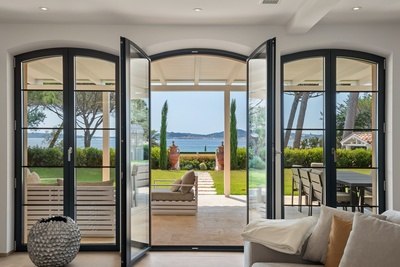
It is convenient to speak of the French Riviera property market as a single entity. In reality, however, the term encompasses a wide range of very different market dynamics. From Saint-Tropez to Saint-Jean-Cap-Ferrat, from Cannes and Mougins to Nice and the areas…
Read more
Côte d’Azur Sotheby’s International Realty presents a distinctive triplex apartment for sale within Villa Surany, a remarkable residence completed at the turn of the 20th century on Boulevard de Cimiez. A rare opportunity to live within one of Nice’s architectural…
Read more
Following a particularly active summer season on the Riviera, autumn 2026 provides an opportunity to take stock of the luxury real estate market across the French Riviera. From Saint-Tropez to Cannes, from Mougins to Nice and onwards to Saint-Jean-Cap-Ferrat and the…
Read more